
Clinical Makeup & Product Safety Testing
Clinical makeup safety testing and general product safety testing are essential procedures designed to ensure that cosmetic and personal care products are safe for consumer use. These evaluations are carried out as part of routine daily testing programmes to provide consistent, reliable assurance across a wide range of product types.
The studies are structured to assess tolerability and safety under controlled conditions, helping to identify any potential for irritation or adverse reactions during normal use. Depending on the product, this may involve clinical assessment, observational grading, and/or instrumental evaluation.
By generating clear, evidence-based safety data, these procedures help build confidence for both brands and consumers. They also support regulatory expectations and provide reassurance that products have been appropriately assessed before reaching the market.
Our Clinical Safety Testing Services
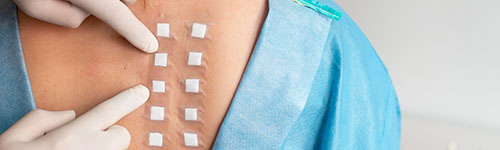
HRIPT - Clinical Patch Test
Claims Substantiated:
- Hypoallergenic formulation
- Dermatologically tested
- Clinically tested
- Clinically proven performance
- Kind to skin
- Mild for skin
- Safe for skin
Secondary Irritation Patch Testing (HRIPTS):
- Jordan & King (Industry Standard).
- Kligman
- Shelanski
Consultant Endorsements:
- Dermatologist Tested
- Dermatologist Approved
- Paediatrician Approved
- Gynaecologist Approved
- Jordan and King Method (Industry standard patch testing) – An adaptation of the original Draize HRIPT method, featuring a three-week induction phase, a one-week rest period, and a two-week challenge phase to assess whether a product induces a sensitisation response. Finn Chambers are used to deliver the test product to the skin via fully occlusive aluminium chambers to maximise exposure at the application site.
- Kligman Method – A variation of patch testing similar to the Jordan and King approach, but incorporating pre-irritation of the test site using SLS (sodium lauryl sulphate) at the start of the study. This is used to enhance sensitivity and help identify products with minimal potential to cause sensitisation.
- Shelanski Method (HRIPT) – Human Repeat Insult Patch Testing conducted on panels of typically 50 to 100 volunteers. The study includes a three-week induction phase with nine consecutive 24-hour patch applications to the same site, followed by a two-week rest period. A challenge patch is then applied and assessed at 48 and 96 hours, with responses compared against both induction and challenge phases to identify potential irritation or allergic reaction. Cumulative irritation is also evaluated across the study period.
- Hypoallergenic testing standard (HRIPT-based) – For hypoallergenic claims, best practice involves a Human Repeat Insult Patch Test with a larger volunteer panel (typically ≥100, ideally around 200), alongside formulation considerations such as avoidance of known fragrance allergens and supported by post-market surveillance data where applicable.
Open Application Patch Test
Claims Substantiated:
- Hypoallergenic
- Dermatologically tested
- Clinically tested
- Clinically proven
- Kind to skin
- Mild for skin
- Safe for skin
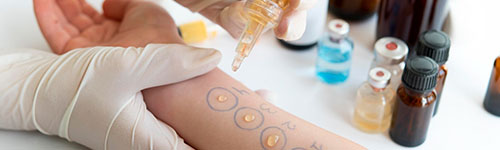
1, 2, 3 or 4 Application Tests involve 30 healthy male and female subjects and are used to assess the skin irritation potential of up to eight test articles per study, alongside two standard controls.
During the active phase, the product is applied once, twice, three, or four times per subject, with approximately 23 hours between each application. One hour after each application, the test sites are assessed and graded for any signs of adverse skin reaction.
This type of open application testing is typically used for products with a high flash point and/or high alcohol content, where occlusive or semi-occlusive patch testing would not be suitable due to the risk of excessive irritation. In these cases, the alcohol is allowed to evaporate, leaving the active ingredients on the skin for assessment.
SPF and UVB Claims
Claims Substantiated:
- SPF rating
- Water Resistant
- Sweat Resistant
- Sand Resistant
COLIPA Method / ISO 24444 Method – International
10 healthy male and female subjects with Fitzpatrick skin types I–III are used to determine the skin’s Minimal Erythema Dose (MED) before and after product application in order to calculate SPF.
Active Phase:
A pre-treatment MED is established, defined as the minimum UV exposure required to produce barely perceptible erythema. The product is then applied, and post-treatment MEDs are measured at treated sites. SPF is calculated as the ratio of pre-treatment MED to post-treatment MED.
Australian / New Zealand Approved Method
This method follows a similar protocol to the COLIPA method but utilises a slightly different UV wavelength to determine the Minimal Erythema Dose (MED).
UVA Claims

Claims Substantiated:
- UVA protection
COLIPA Method / ISO 24443 Method – International
This test is conducted in an in vitro setting under controlled clinical conditions. The product is evaluated in line with regulatory requirements using UVA wavelength exposure from a solar simulator to assess its ability to protect against effects associated with hyper-melanin production and DNA degradation.
Instrumentation Information:
UVA testing is carried out using multiple validated systems, including Solar Light Company multi-port solar simulators, single-port solar simulators, a Spex SKINSKAN spectrofluorometer, LabSphere and Helios spectrophotometers, and an Optronic Laboratories OL754 spectroradiometer system, all supported by a NIST-traceable calibration system.
Human Eye Claims

Claims Substantiated: product claims are supported through appropriate testing and evaluation
- No Tears – formulated to be gentle and designed to minimise irritation
- Ophthalmologically Tested – assessed under ophthalmological supervision to evaluate eye tolerance and safety
- Ophthalmologist Approved – reviewed and endorsed by qualified ophthalmologists following product assessment
- Kind to Eyes – designed with eye comfort and mildness in mind
- Consultant Ophthalmologists – supported by a team of highly qualified, licensed ophthalmologists who provide professional consultation and expertise
Human Eye Clinical Trials
This study involves 12 healthy male and female volunteers and is designed to evaluate the comparative eye irritation potential of one test article alongside standard control products.
During the active phase, a Consultant Ophthalmologist conducts slit lamp examinations immediately before, during, and after direct instillation of the test article. The study is carried out in two phases. Phase 1 is a rising dose tolerance phase, where the product is applied to one eye at very high dilution in a small number of subjects. If no cut-off grade is reached for conjunctival irritation—assessed across both bulbar and palpebral regions—or for corneal irritation, the dilution is increased in a step-wise manner until the in-use concentration is reached. For shampoos, this is typically around 10% wt/vl (10% solid mass to liquid volume). Once this level is achieved, the study progresses to Phase 2, where the in-use concentration is compared against a benchmark product.
Human Eye Non-Instillation
This is a single-blind within-subject comparison study conducted via non-instillation ophthalmological testing using 30 healthy volunteers.
In cases where the product may cause mechanical effects—such as mascara, while still being intended for use around the eye—a Human Eye Non-Instillation Test is performed. A Consultant Ophthalmologist carries out baseline examinations on day 0 to establish pre-treatment eye health, followed by a final assessment at the end of the study period to identify any post-treatment changes. Participants are provided with the test article, a calendar, and instruction sheet for at-home use between clinical visits.
Photosensitisation and Phototoxicity

Claims Substantiated: Non-Photosensitive, Non-Phototoxic,
Phototoxicity Test
A phototoxicity test involves 10 healthy male and female subjects to assess the skin’s phototoxic potential of one test article alongside two standard controls.
Active Phase:
A patch is applied four times, with approximately 23 hours between each application. UV exposure is carried out one hour after each patch removal. Skin reactions are scored 24 hours after each UV exposure (following the first, second, third, and fourth exposures).
A range of patch types and adhesive materials may be used depending on whether a fully occlusive or semi-occlusive study design is required.
Photosensitisation Test
A photosensitisation test is conducted on a minimum of 25 subjects over a 6-week study period.
Active Phase:
Induction patches containing Finn Chambers are applied on Days 1, 3, 5, 8, 10, 12, 15, 17, and 19. UV exposures are then performed on Days 3, 5, 8, 10, 12, 15, 17, 19, and 22, with skin assessments conducted 24 hours later.
A challenge patch is applied on Day 36 to a naïve skin site, followed by UV exposures on Days 38 and 40, with assessments performed 24 hours later.
As with other studies, a range of patch types and adhesive materials are used depending on whether a fully occlusive or semi-occlusive design is required.
Wound Care Claims
Clinical Trial Claims:
- Wound area and circumference measurement
- Wound contraction and healing progression
- Overall wound healing performance
- Adhesiveness during wear and use
- Assessment of skin damage on removal
- Skin healing and recovery response
- Evaluation of erythema (skin redness)
- Pain response and tolerance
- Skin barrier protection and support
- Skin barrier recovery function
- Odour control performance
- Exudate absorption capacity