
Efficacy Testing & Claim Substantiation
Efficacy testing refers to a set of structured procedures used in product research and development to evaluate whether a product performs its intended function under controlled conditions.
These studies are designed to generate objective, evidence-based data that can be used to substantiate key performance claims made on packaging, marketing materials, and advertising. Depending on the product type and study design, this may include both instrumental measurements and expert or consumer assessments.
By comparing baseline and post-treatment results, efficacy testing helps determine whether a product delivers measurable improvements in its claimed area of benefit. This provides brands with robust scientific support for their claims, while also helping to guide product development, refinement, and positioning within the market.
Our Efficacy Testing Services
Anti Wrinkle Claims
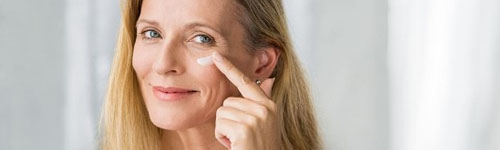
Clinical Trial Claims: Profilometry Assessment
Claims Substantiated: Anti-wrinkle, Reduces Wrinkles, Wrinkle Defending.
This 8-week study involved 30 participants with visible wrinkles and crow’s feet and compared treatment results against a no-treatment control group. Assessments included both laser profilometry analysis and SPQ (Self-Perception Questionnaire) evaluations conducted throughout the study period.
The active phase of the study used advanced profilometry assessment techniques to scientifically measure changes in skin texture and wrinkle depth. Using SILFLO resin technology, detailed replicas of the skin surface were created as flexible moulds of the skin’s topography. These replicas were then analysed electronically using laser profilometry to generate accurate graphical representations of the treatment areas.
Measurements were taken at both the beginning and end of the study to identify any statistically significant improvements in the appearance of wrinkles and crow’s feet.
Anti Inflammatory Claims
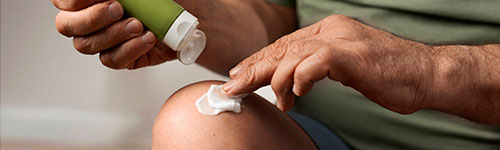
Claims Substantiated: Reduces the appearance of redness / inflammation, Anti Inflammation.
This type of study design depends on the specific anti-inflammatory product being evaluated. It’s important to note that only general cosmetic and toiletry products are tested, not medical products.
Typically, the study involves visual assessment of the skin before and after treatment to monitor changes in inflammation over time. To create a controlled response, the skin site is intentionally challenged using SLS or UV exposure, usually up to 4 x MED (Minimal Erythema Dose). From there, both treated and untreated sites are observed until the inflammation naturally resolves, allowing a clear comparison of recovery rates.
Anti Cellulite Claims
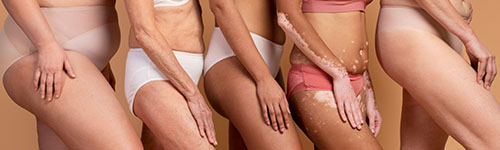
Testing For:
- Dimpling
- Look
- Skin Roughness
- Appearance of cellulite
- Texture of Orange peel
Cellulite assessment is typically based on a combination of clinical observation, thigh circumference measurements, body mass index (BMI), and thermographic imaging. In studies evaluating anti-cellulite products, alongside volunteer feedback and expert grading, GCR also uses more objective, non-invasive evaluation methods. These can include high-resolution macrophotography and ultrasound imaging to provide a clearer, more detailed analysis of skin structure and appearance.
Collagen
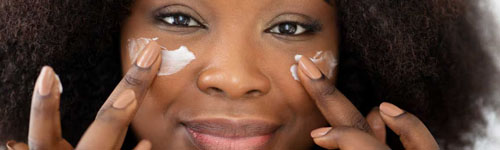
Claims Substantiated: Skin regeneration, Collagen production testing
Testing For: This study measures the regenerative ability of the skin under the influence of the test sample by assessing changes in cell turnover. The level of increased cell renewal is determined while the product is applied.
The dansyl chloride staining method is used, where the skin is marked at baseline. The number of days until the fluorescence ceases is then recorded.
A typical study involves 20 subjects, with regular assessments carried out over a 14-day period.
Cellulite assessment is typically based on a combination of clinical observation, thigh circumference measurements, body mass index (BMI), and thermographic imaging. In studies evaluating anti-cellulite products, alongside volunteer feedback and expert grading, GCR also uses more objective, non-invasive evaluation methods. These can include high-resolution macrophotography and ultrasound imaging to provide a clearer, more detailed analysis of skin structure and appearance.
Hair Care Products
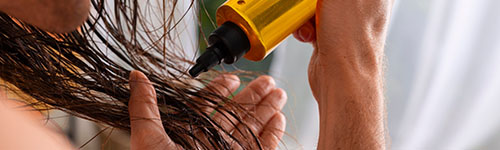
What We Offer:
- Hair care clinical testing includes a range of studies designed to evaluate both shampoo and treatment performance, including half-head comparison tests and full efficacy assessments for shampoos and conditioners
- Targeted studies are also carried out on specific concerns such as thinning hair and dandruff, as well as hair colour permanence and overall product performance
- Additional analysis methods may include hair shaft diameter measurements, anagen/telogen ratio assessment, hair counting analysis, and gravimetric hair pull testing to evaluate strength and shedding
The regimented combing method uses a standardised technique to collect shed hair during controlled combing. The collected hair is then separated and counted to identify broken, intact, and bulbous hairs.
Hair diameter measurements are carried out using optical micrometric techniques, allowing direct measurement of individual hair shaft thickness.
Gravimetric pull analysis is a manual method used to collect and measure hair fallout aggregates, helping to assess patterns of reduced hair loss.
The hair pluck technique involves using specialised forceps to remove individual hair shafts from the scalp. This allows for analysis of the ratio between anagen (growth), catagen (rest), and telogen (shedding) phases of the hair cycle.
A trichological count (hair count analysis) is used to assess hair growth patterns before and after treatment. A defined area of the scalp is analysed using video microscopic procedures to help determine product efficacy.
Human Eye Claims

Claims Substantiated: product claims are supported through appropriate testing and evaluation
- No Tears – formulated to be gentle and designed to minimise irritation
- Ophthalmologically Tested – assessed under ophthalmological supervision to evaluate eye tolerance and safety
- Ophthalmologist Approved – reviewed and endorsed by qualified ophthalmologists following product assessment
- Kind to Eyes – designed with eye comfort and mildness in mind
- Consultant Ophthalmologists – supported by a team of highly qualified, licensed ophthalmologists who provide professional consultation and expertise
Human Eye Clinical Trials
This study involves 12 healthy male and female volunteers and is designed to evaluate the comparative eye irritation potential of one test article alongside standard control products.
During the active phase, a Consultant Ophthalmologist conducts slit lamp examinations immediately before, during, and after direct instillation of the test article. The study is carried out in two phases. Phase 1 is a rising dose tolerance phase, where the product is applied to one eye at very high dilution in a small number of subjects. If no cut-off grade is reached for conjunctival irritation—assessed across both bulbar and palpebral regions—or for corneal irritation, the dilution is increased in a step-wise manner until the in-use concentration is reached. For shampoos, this is typically around 10% wt/vl (10% solid mass to liquid volume). Once this level is achieved, the study progresses to Phase 2, where the in-use concentration is compared against a benchmark product.
Human Eye Non-Instillation
This is a single-blind within-subject comparison study conducted via non-instillation ophthalmological testing using 30 healthy volunteers.
In cases where the product may cause mechanical effects—such as mascara, while still being intended for use around the eye—a Human Eye Non-Instillation Test is performed. A Consultant Ophthalmologist carries out baseline examinations on day 0 to establish pre-treatment eye health, followed by a final assessment at the end of the study period to identify any post-treatment changes. Participants are provided with the test article, a calendar, and instruction sheet for at-home use between clinical visits.
Moisturising Claims

Claims Substantiated: Hydrates and moisturises, helping to combat dehydration and deliver up to ‘x’ hours of moisture. Soothes and softens the skin while helping to support the skin’s natural barrier, with added conditioning benefits.
- No Tears – formulated to be gentle and designed to minimise irritation
- Ophthalmologically Tested – assessed under ophthalmological supervision to evaluate eye tolerance and safety
- Ophthalmologist Approved – reviewed and endorsed by qualified ophthalmologists following product assessment
- Kind to Eyes – designed with eye comfort and mildness in mind
- Consultant Ophthalmologists – supported by a team of highly qualified, licensed ophthalmologists who provide professional consultation and expertise
Corneometer / Dermal Phase Meter Assessment
This study typically involves 15 healthy male and female subjects and is designed to assess a product’s ability to increase skin hydration by drawing moisture into the epidermis from the surrounding environment. Study duration varies depending on the moisturisation claim, with a standard assessment period of 24 hours. A positive control (glycerine) and a negative control (untreated skin) are included. The Dermal Phase Meter may be used for US studies or where specifically requested.
During the active phase, measurements are taken at multiple time points, typically at 0 (pre-treatment), 1, 3, 5, 8, 12, and 24 hours, with extended assessments up to 48 hours where required by the claim. Both the Corneometer and Dermal Phase Meter use a large surface probe that is placed on the skin to measure hydration levels within the stratum corneum. These instruments assess the dielectric constant of the skin relative to water (value of 1), with changes in hydration reflected in the resulting readings. The output is expressed as an arbitrary Corneometer or Dermal Phase Meter value.
Tewameter (TEWL) Assessments
This study is typically conducted on 15 subjects and compares product use against a no-treatment control, with measurements taken at t=0h, t=1h, and t=8h. It is most commonly used for emollient products, which form a protective film over the skin to support barrier function and reduce interaction with the external environment.
The assessment measures transepidermal water loss (TEWL), which is the amount of water evaporating through the epidermis. This allows evaluation of the skin’s barrier integrity by quantifying what is normally an invisible but continuous process of water loss.
In the active phase, the ‘open cylinder’ method is used, where a probe containing paired moisture and temperature sensors is placed on the skin. These measure water vapour and temperature within the chamber, allowing calculation of TEWL as grams per square metre per hour (g/m²h). If the skin’s barrier function is compromised, TEWL values increase significantly. The study design is similar in structure to humectant-based product testing.
Nail Products
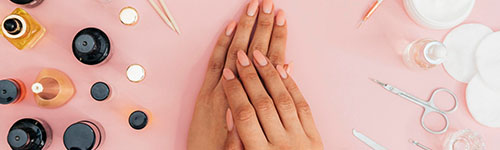
Claims Substantiated: Global Clinical Research (GCR) tests a wide range of nail products as the category continues to expand, including polishes, gels, enamels, and acrylic systems.
We assess core performance factors such as application ease, drying speed, gloss, and colour intensity, along with finish quality for an even, smooth result.
Testing also covers hardness, chip resistance, wear time, and overall durability, as well as checking for any staining of the nail plate.
Lip Products
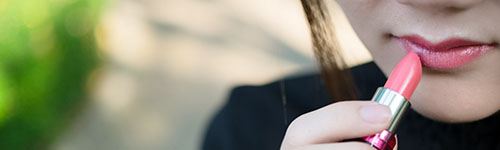
Claims Substantiated:
- Long lasting wear for extended performance
- Smudge and crease resistant for a clean finish
- Delivers a glossy finish with enhanced shine
- Hydrating formula to help maintain moisture
- Helps condition and care for the lips
Lip products are available in a variety of formulations, including shimmer, matte, powder, cream, and liquid formats. These are also offered with different applicator types to suit preference and application style, such as palettes, pencils, tubes/sticks, and liquid applicators.
Skin Lightening Claims
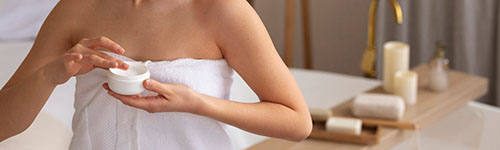
Claims Substantiated: Improves overall skin luminosity and radiance, helping to promote a more even-looking complexion. Supports a more uniform skin tone while helping to reduce the appearance of uneven pigmentation. Also helps diminish the look of hyperpigmentation and age spots for a clearer, more balanced skin appearance.
During the active phase, participants are provided with an instruction sheet, calendar, and the assigned test product, which is applied to the left inner upper arm. Measurements are taken within one hour of application at multiple time points throughout the 6-week study period. A final assessment is then carried out at the end of the 6-week treatment phase.
Skin Firming Claims
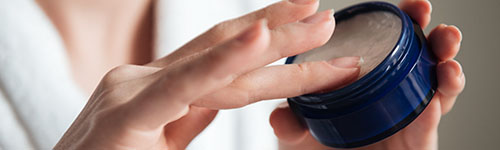
Claims Substantiated:Firms the skin and helps improve the appearance of elasticity, along with additional skin conditioning benefits.
This study typically involves 30 subjects, usually with ageing skin or reduced firmness, and is conducted over an 8-week period with assessments at baseline (week 0) and week 8.
Skin elasticity and firmness are evaluated using the industry-standard Cutometer, which measures skin viscoelasticity. A probe is placed on the skin to apply and release a vacuum, drawing the skin upward before recording its return to baseline. The resulting data produces a graph showing angle theta of torque over time, reflecting both initial extensibility under vacuum and the rate of recovery once released.
Dermal Torque Meter (DTM)
This assessment follows a similar study design but uses an alternative instrument where required. The Dermal Torque Meter features inner and outer chambers, with the inner chamber applying controlled torsional force to the skin.
Anti-Perspirant and Deodorant
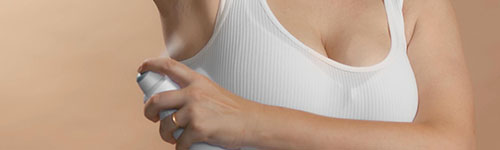
Global Clinical Research (GCR) has extensive experience in antiperspirant efficacy testing and has been among the early pioneers in developing and conducting this type of work within the industry. Our team continues to operate at the forefront of scientific development, using both established industry protocols and bespoke unpublished methodologies designed for specific client needs.
We are a leading provider of antiperspirant back screening tests across the USA and Europe. Due to strong demand, these studies are frequently scheduled well in advance, and at peak times we experience high volumes of confirmed work, reflecting the popularity and importance of this type of testing.
The purpose of these studies is to screen up to eight antiperspirant formulations and assess their relative efficacy under controlled conditions. Please note that this is a screening model only and does not replace proof of efficacy in accordance with the FDA monograph.
Testing is routinely carried out in the United States and may be conducted in either a hot-room facility or sauna environment, depending on client requirements and study design. This allows for consistent evaluation of product performance under elevated heat conditions.
In addition to our testing capabilities, the GCR team is also available to provide expert witness support where required in litigation involving product performance or related claims.
Anti-Acne Claims

Clinical Trials:
These study designs vary depending on the type of spot- or acne-prone skin product being evaluated. Please note, only general cosmetic and toiletry products are tested, not medical treatments. As such, assessments focus on visible skin condition before and after use, particularly changes in inflammation and overall skin appearance.
Our expert skin assessors and dermatologists carry out detailed evaluations using both qualitative and quantitative lesion counting, supported by high-resolution macrophotography and structured visual grading. These methods allow for consistent comparison of skin condition at baseline and post-treatment, helping to determine product performance over the course of the study.
Baby Products

Clinical Trials:
- Baby bubble baths formulated for gentle cleansing and comfort
- Baby shampoos designed for mild, tear-free hair and scalp care
- Baby lotions to help moisturise and soften delicate skin
- Baby oils for hydration and skin conditioning
- Baby wipes for convenient, gentle cleansing on the go
- Baby diapers tested for comfort, fit, and absorbency performance
- Baby diaper creams and ointments to support skin protection and care
- Kids’ toothpaste developed for effective yet age-appropriate oral care
- Kids’ toothbrushes designed for gentle and effective cleaning
- Kids’ sunscreens formulated to help protect young skin during sun exposure
Global Clinical Research (GCR) conducts testing on over-the-counter products such as creams, gels, ointments, and other topical remedies used in the treatment of cold sores.
Our trained graders routinely assess and clinically grade cold sores throughout the study period, supporting consistent and reliable evaluation of product performance. Where required, photographic documentation can also be included to provide a clear visual record of progression and treatment effect.
These studies are designed to support brands in demonstrating product efficacy under controlled conditions, helping to build stronger evidence for performance claims and product development.
To find out more or discuss a study, you can complete the short form here or use our main clinical trial enquiry form, and a member of the GCR team will be in touch to discuss how we can support your testing requirements.
Dietary Claims
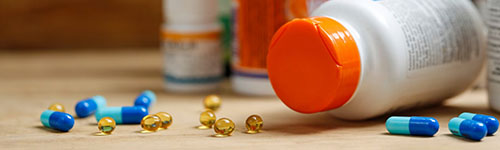
Clinical Trials:
- Clinical trials conducted for efficacy and claim substantiation of multivitamins and mineral supplements
- Studies covering herbal products and plant-based formulations
- Testing of a wide range of other health and nutritional products
- Delivered within agreed timelines and budget requirements, helping to save time and cost while streamlining the process
- Designed to make the testing process more efficient, manageable, and stress-free for clients
Global Clinical Research (GCR) conducts quality clinical testing for dietary supplements used in health and wellness.
We provide expert support in selecting the most appropriate study design, alongside efficient recruitment and smooth trial management from start to finish. Our service also includes clear, structured report writing to support claim substantiation for your product.
Cold Sore Claims
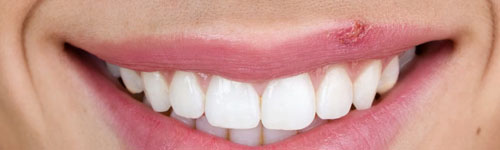
Clinical Trial Claims: Effective against Cold Sores
Global Clinical Research (GCR) conducts testing on over-the-counter products such as creams, gels, ointments, and other topical remedies used in the treatment of cold sores.
Our trained graders routinely assess and clinically grade cold sores throughout the study period, supporting consistent and reliable evaluation of product performance. Where required, photographic documentation can also be included to provide a clear visual record of progression and treatment effect.
These studies are designed to support brands in demonstrating product efficacy under controlled conditions, helping to build stronger evidence for performance claims and product development.
To find out more or discuss a study, you can complete the short form here or use our main clinical trial enquiry form, and a member of the GCR team will be in touch to discuss how we can support your testing requirements.
Home Use Trials

Clinical Trial Claims: Claims supported depend on the product type, study design, and duration of the trial. These studies are not typically used to substantiate as many efficacy claims as full clinical trials, but they are valuable for monitoring any incidence of adverse reactions.
They are also highly useful in assessing consumer perception and preference, providing insight into how a product is experienced in real-world use and how it compares within its category.
Subject panel sizes vary depending on the number of participants required to achieve a meaningful level of statistical analysis during data evaluation.
During the active phase, a relevant consultant conducts expert visual assessments and/or instrument-based analysis of each subject at the area under evaluation. Participants are then provided with the test product and, where necessary, instructed on correct application and use at home over a specified period.
At the end of the study, a post-treatment assessment is carried out by the consultant using the same visual and/or instrumental methods to evaluate any changes at the test site. Subjects also complete an SPQ (Self-Perception Questionnaire) to capture subjective feedback and overall perception of the product.
Foot Care Claims
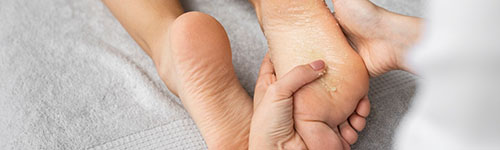
Clinical Trial Claims: Global Clinical Research (GCR) conducts testing for a range of foot care and pedicure products, assessing multiple performance and skin condition-related outcomes.
These studies may evaluate exfoliating and hydrating effects, as well as improvements in hard skin and cracked heels. Additional assessments can include control of sweat and odour, along with evaluation of blisters and nail discolouration, depending on the product and study design.
Wound Care Claims
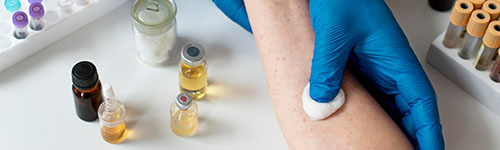
Clinical Trial Claims:
- Wound area and circumference measurement
- Wound contraction and healing progression
- Overall wound healing performance
- Adhesiveness during wear and use
- Assessment of skin damage on removal
- Skin healing and recovery response
- Evaluation of erythema (skin redness)
- Pain response and tolerance
- Skin barrier protection and support
- Skin barrier recovery function
- Odour control performance
- Exudate absorption capacity
We also evaluate active ingredients and bioactives, alongside antimicrobial products such as silver-based systems and other broad-spectrum biocides. In addition, studies may include moisture-retentive products such as alginates and other advanced wound care formulations, depending on the study design and product type.
Oral Use Products
Clinical Trial Claims: This is fully flexible and can be tailored in discussion with our Business Development team and Project Managers.
Where a product is intended for instant visible results or rapid assessment of safety and efficacy, a shorter study design can be implemented to reflect this purpose.
Anti-Blackhead Claims
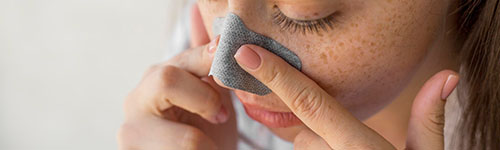
Clinical Trial Claims:
- Non-comedogenic formulation designed not to block pores
- Helps reduce the appearance of blackheads
- Assists in purifying the skin for a clearer-looking complexion
- Helps to unclog pores and support a cleaner skin surface
Throughout the study period, products are applied under patch conditions. In the final week, a surface biopsy is performed using a glass slide coated with cyanoacrylate glue. The slide is placed over the test site and then removed, lifting comedones and horny cells from the skin surface.
These samples are then examined under low-power magnification (approximately 50x), where comedones are counted per surface area to provide a quantitative assessment of comedogenic potential.
Feminine Hygene
Claims Substantiated:
- Overall satisfaction with product performance
- Leakage protection and reliability in use
- Ability to maintain a dry feeling throughout wear
- Skin comfort during use
- Ease of use and removal of the product
- Stability and whether the product stays securely in place
- Level of discretion during wear
- Overall fit and suitability for the user
- Softness and comfort of materials
The results help support informed consumer decision-making and provide valuable insight into real-world product performance.
Testing For Preference

Claims Substantiated:
- Usability and suitability of the product for the intended target demographic
- Overall consumer acceptability within the relevant market
- User feedback on in-use performance and intended product function
- Competitive positioning through comparison testing against rival brands, including usability, suitability, and functional performance
- Consumer opinion on branding, packaging, shape, and fragrance, often supported by brief personal experience feedback from each participant
Study size and structure may vary depending on objectives, but this type of research is often a key step in product development and launch, helping to confirm consumer perception and identify potential unique selling points (USPs).